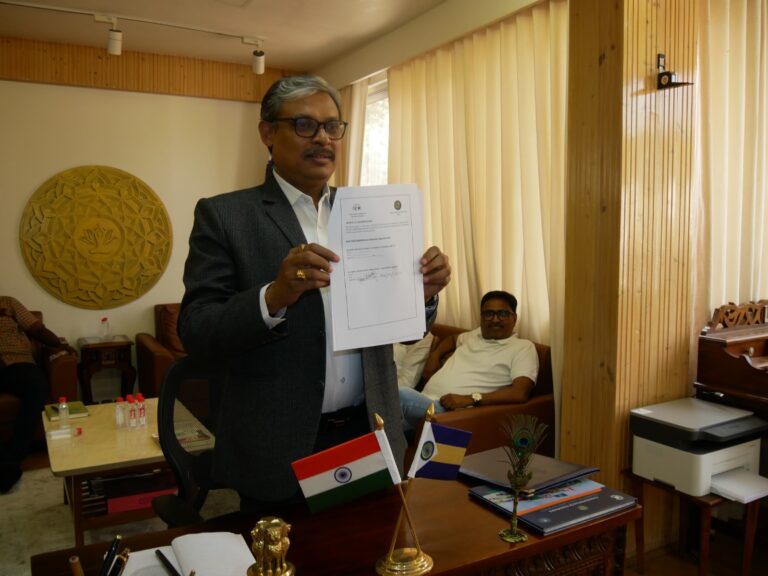
Strategic MoU Signed to Reshape Bilateral Trade Relations and Drive MSME Growth
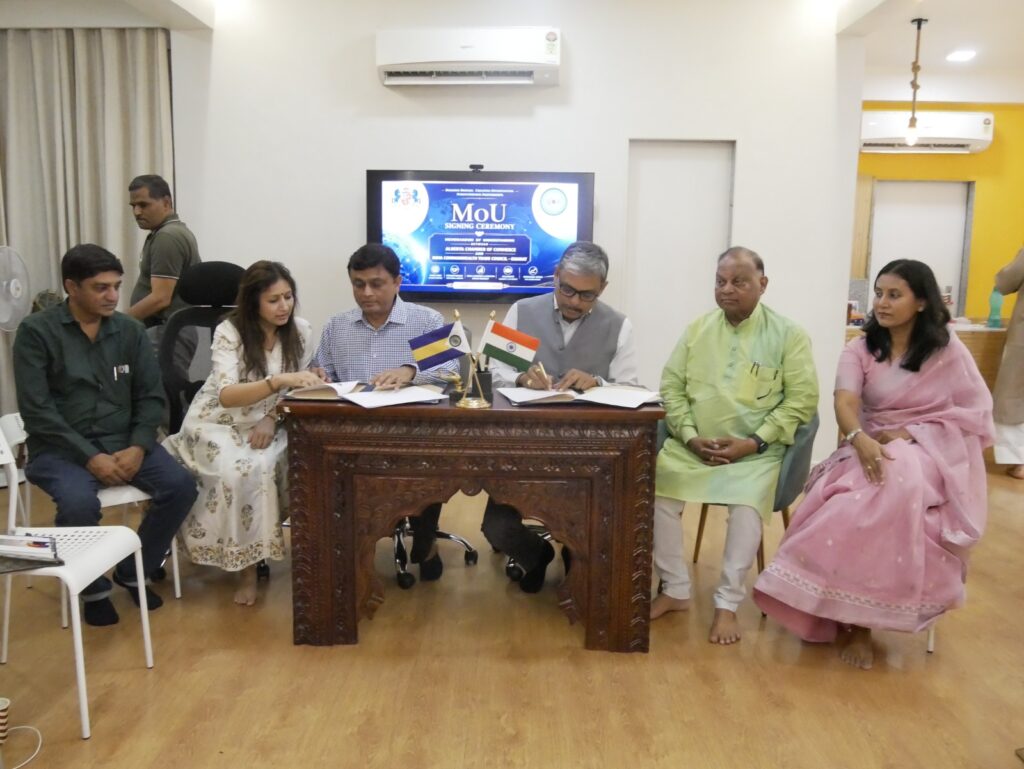
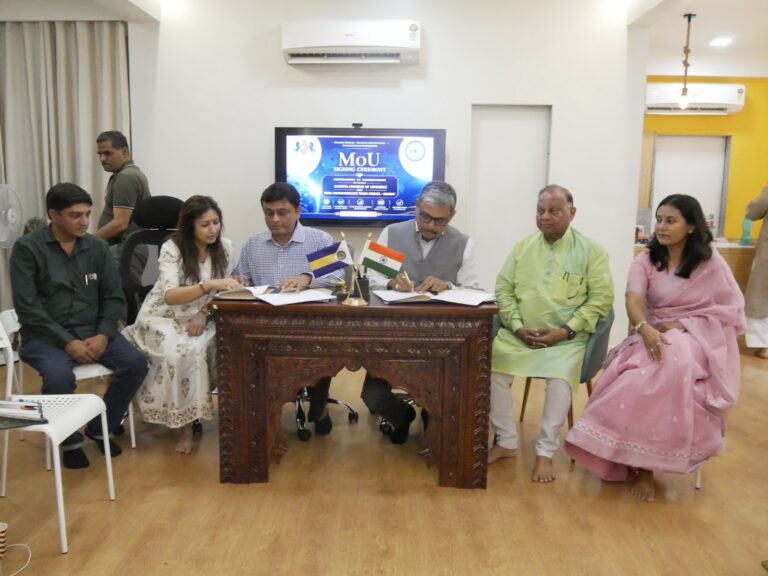
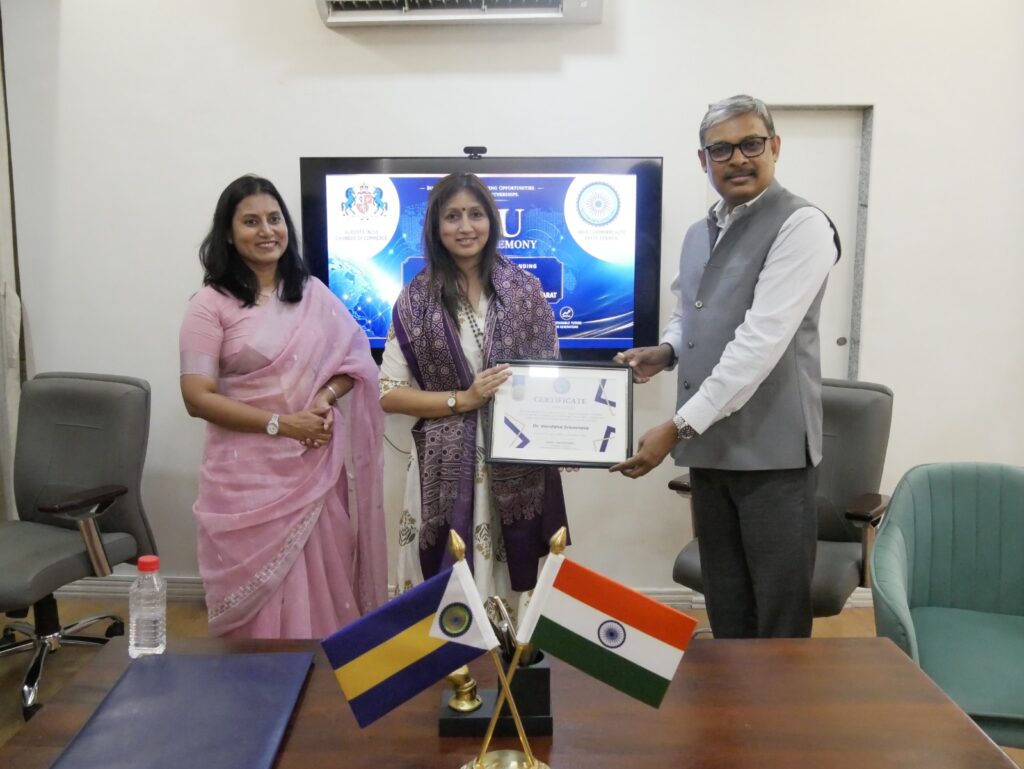
In a significant move to strengthen economic ties between India and Canada’s Alberta province, the India Commonwealth Trade Council (ICTC), Gujarat and the Alberta India Chamber of Commerce (AICC) signed a landmark Memorandum of Understanding on Sunday evening, signalling a decisive pivot toward sectoral collaboration and mutual economic growth.
The meeting, held at the ICTC Vadodara office on April 26th, brought together over a dozen key stakeholders, including government advisors, industry leaders, and diplomatic representatives, to outline a comprehensive roadmap for bilateral trade expansion. The gathering underscored a broader strategic shift within both organizations—one moving away from traditional member-driven models toward a more dynamic, sector-focused partnership architecture.

A Changing Political Landscape
The timing of this agreement reflects a recalibration in Canada-India relations, which have seen significant shifts over the past two years. Rather than retreating from commerce, participants emphasized that favourable conditions persist for India’s consumer economy, and that a “win-win situation” remains achievable for both nations.
“We’re looking at strategic diversification,” said representatives from both chambers, noting that India’s trade portfolio has expanded beyond traditional partners in the wake of recent tariff restructurings. Meanwhile, ongoing negotiations for a Comprehensive Economic Partnership Agreement (CEPA) between the two countries were cited as evidence of political will to deepen economic integration.
The consensus in the room was clear: the era of adversarial trade relations has given way to pragmatic partnership. By leveraging the “Viksit Bharat @ 2047” vision—India’s ambitious roadmap for sustainable development—both organizations aim to position themselves as architects of next-generation bilateral commerce.
Critical Minerals and Energy: Perhaps the most substantive portion of the discussion centred on Alberta’s position as a global energy powerhouse and India’s growing appetite for critical resources. Alberta, holder of the world’s third-largest proven crude oil reserves after Venezuela and Saudi Arabia, stands positioned as a crucial supplier for India’s energy security needs.
The meeting identified crude petroleum as the anchor commodity for the partnership. But the ambitions extend far beyond oil. Potash, lithium batteries, and urea emerged as priority materials for India’s agricultural and manufacturing sectors.
“Alberta’s oil production now rivals that of entire nations,” noted Vandana ji, Strategic Advisor to the AICC India Chapter, with only major global producers such as Iraq and a handful of others exceeding the province’s output capacity. At this production scale, combined with Alberta’s established infrastructure for heavy crude export to US refineries, the province positions itself as a reliable long-term supplier for India’s economic expansion.
Diversification Beyond Energy
While energy takes center stage, the MOU envisions a multi-sectoral approach to trade.
Agricultural collaboration—encompassing chickpeas, agricultural products, and emerging AI-driven agricultural solutions—figured prominently in discussions. A joint dialogue on AI governance was proposed, reflecting recognition that technological innovation will shape next-generation trade relationships. Manufacturing and industrial sectors were equally emphasized. Leather exports from Kolkata to Alberta, textile partnerships, and pharmaceutical manufacturing represent opportunities for India’s MSME (Micro, Small, and Medium Enterprises) ecosystem to access North American markets. These segments, stakeholders noted, form the backbone of India’s export-driven growth strategy.
Education and tourism emerged as complementary growth vectors. The MOU envisions formalized study-abroad programs and expanded student mobility—avenues that strengthen people-to-people ties while supporting India’s knowledge economy.

From “China + 1” to Strategic Autonomy
A recurring theme throughout the meeting was India’s evolving position in global supply chains. The discussion of the “China + 1” strategy—wherein companies diversify manufacturing away from sole reliance on Chinese production—positioned India as a compelling alternative. Participants acknowledged that buyer capacity versus consumer capacity dynamics are shifting in India’s favour, with the nation assuming an increasingly prominent role in global economic architecture.
This strategic pivot reflects deeper geopolitical realities. As tariff regimes reshape international commerce and geopolitical tensions constrain traditional partnerships, countries like India seek reliable, like-minded partners. Canada, with its democratic governance and integrated North American economy, presents an attractive option for Indian businesses seeking secure market access.
Looking Ahead: A Packed Diplomatic Calendar
The signing ceremony marked not an endpoint, but a launchpad for an ambitious series of international engagements. A Mauritius delegation has been scheduled for July, continuing ICTC’s established momentum in African trade partnerships. A major multilateral summit involving 54 nations is planned for late July in Delhi, requiring invitations to be dispatched in May.
More ambitiously still, an Alberta-India-Africa-Canada Summit is being proposed for June to foster triadic cooperation across the commodity, manufacturing, and service sectors.
Conclusion: Towards a New Trade Architecture
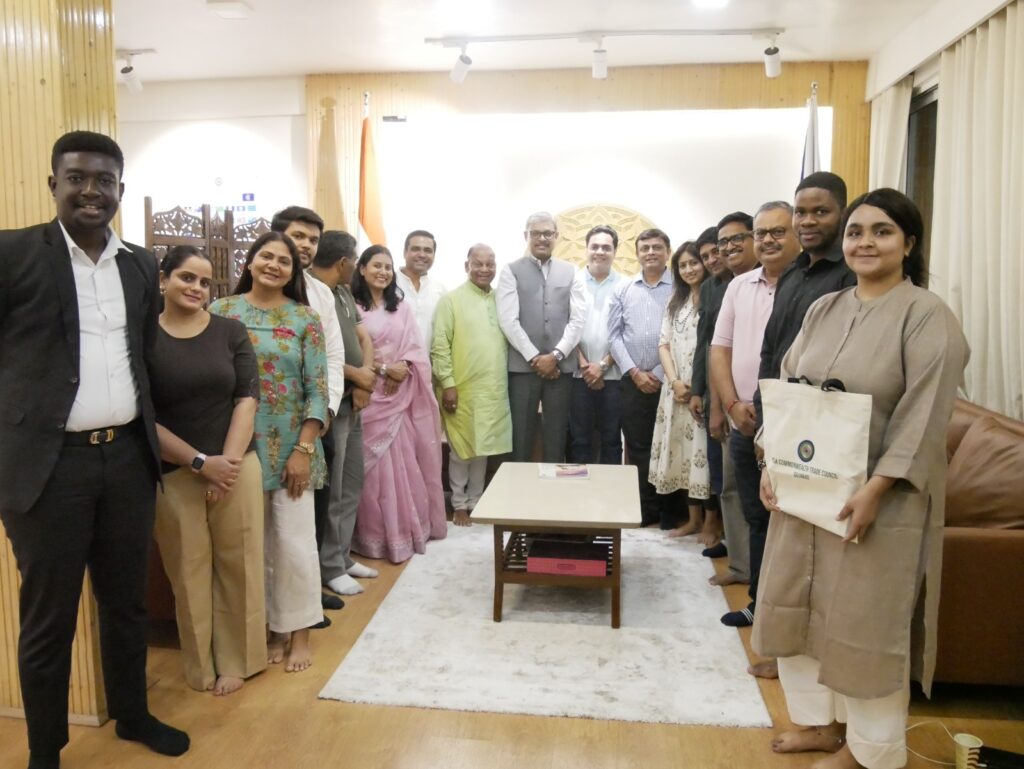
Sunday’s gathering in Vadodara represents a watershed moment in India-Alberta relations. As both entities signed their agreement, they committed to “frequent interactions and joint activities to foster transparency and trust”—the organizational bedrock of sustainable trade partnerships.
The specificity of the discussions—from barrels-per-day targets for crude oil to lithium sourcing networks to MSME participation frameworks—suggests that this MOU is grounded in operational reality rather than rhetorical flourish. With key contacts logged, objectives articulated, and action items assigned, the groundwork has been laid for one of the Commonwealth’s most significant bilateral trade initiatives in recent years.
As geopolitical winds continue to shift and supply chains undergo historic reconfiguration, partnerships like the ICTC-AICC accord offer a template for pragmatic, mutually beneficial collaboration. Whether in energy, agriculture, manufacturing, or emerging sectors like AI- driven solutions, India and Alberta appear poised to write the next chapter in bilateral Commonwealth commerce.