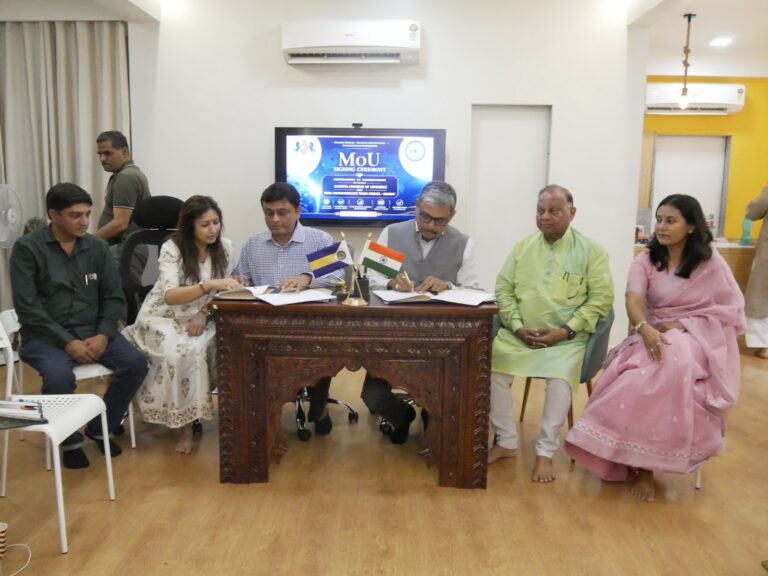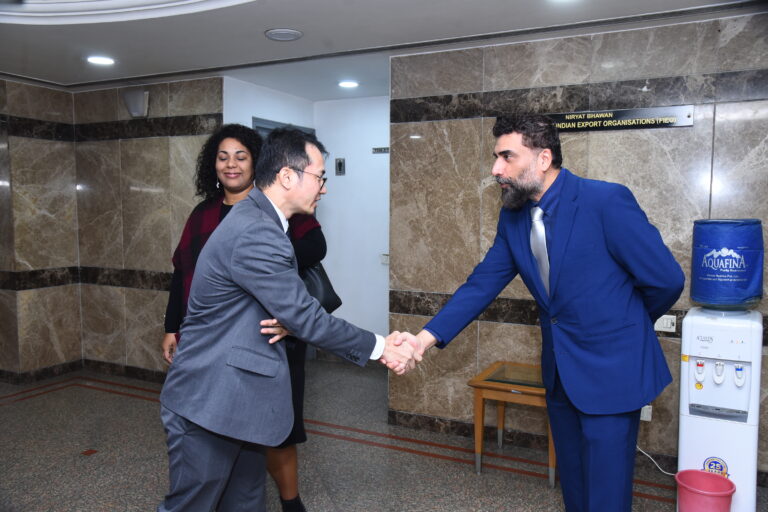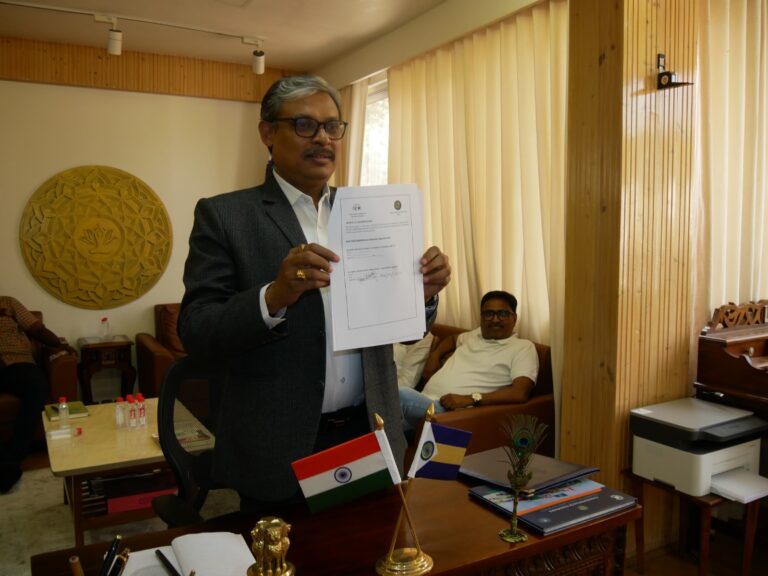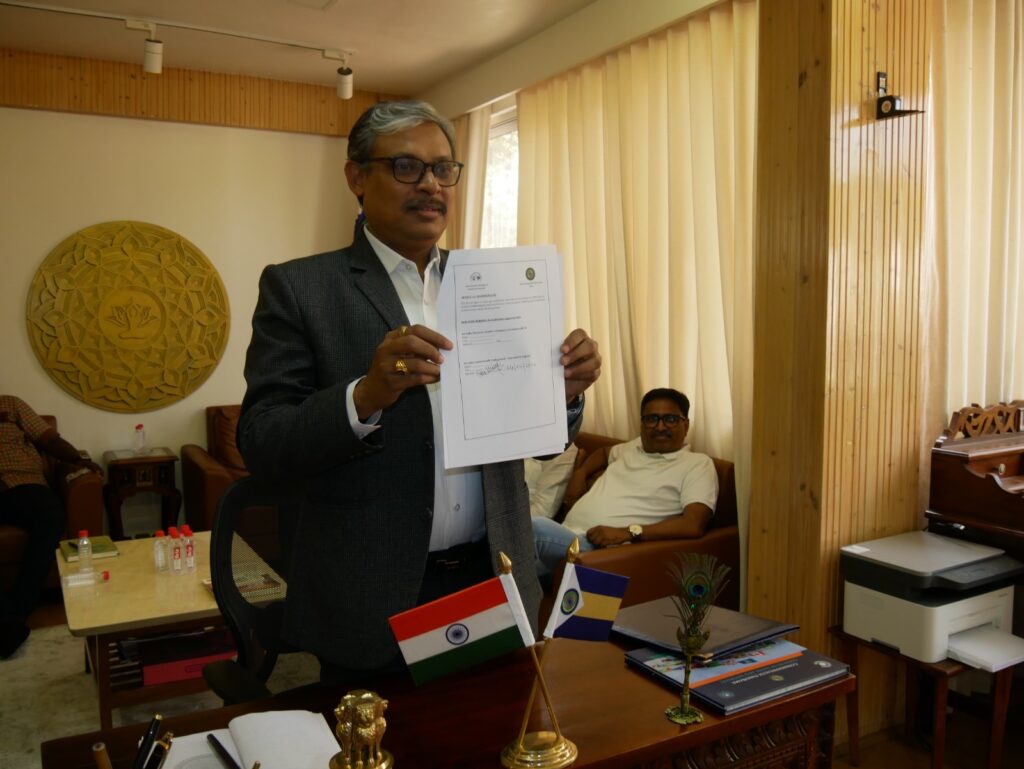
The India Commonwealth Trade Council, Gujarat, and the India-Botswana Chamber of Commerce & Industry have signed a Memorandum of Understanding, marking a significant step in strengthening India–Botswana bilateral trade relations.
The India-Botswana Chamber of Commerce & Industry (IBCCI) is a member-driven organization dedicated to fostering bilateral trade, investment, and economic cooperation between India and Botswana. IBCCI serves as a bridge for businesses across the two nations, providing advocacy, networking opportunities, and market insights to promote growth across key sectors, including mining, pharmaceuticals, and technology. IBCCI is further engaged in promoting initiatives such as the ITEC Programme and ICCR Scholarships for education in India.
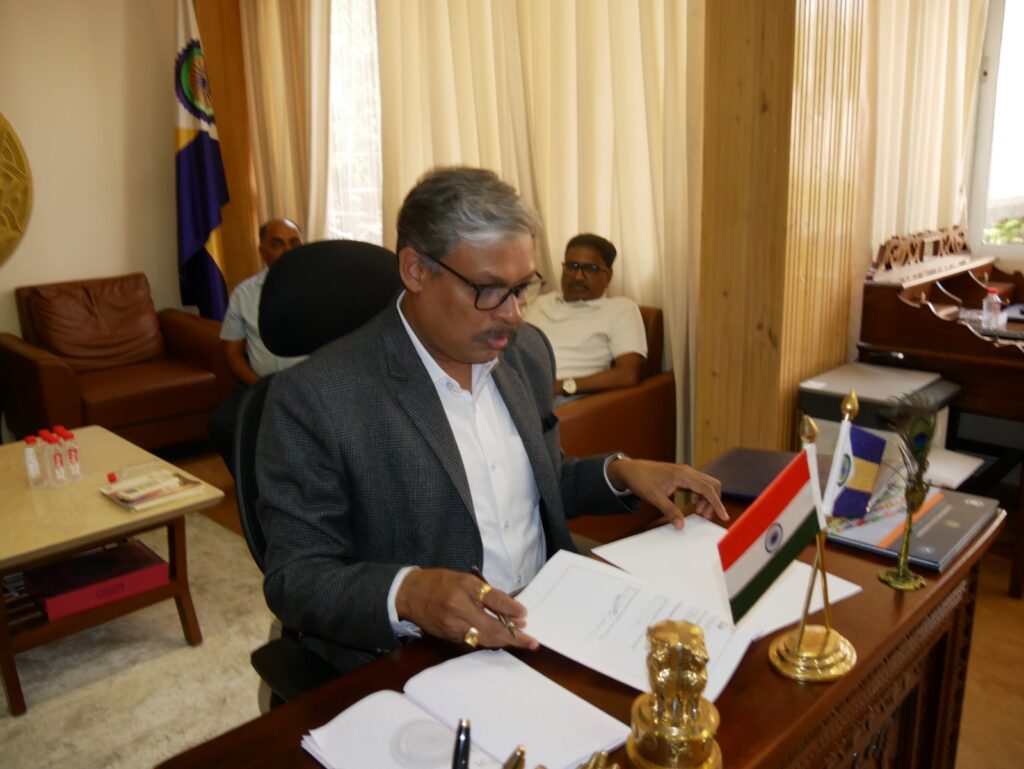
The Memorandum of Understanding was signed via a formal Zoom meeting, with the respective signatories present at their respective offices. Mr. Viral Chaudhary, Chairman of ICTC Gujarat, signed the MoU at the ICTC Vadodara Office, while Mr. Abhinandan Kumar, President of IBCCI, signed at the IBCCI office in Botswana. The signing was witnessed by a distinguished group of members and advisors from both sides.
The meeting commenced with formal introductions from all members in attendance on both sides of the Zoom call. The diverse composition of the gathering reflected the breadth of sectors represented, spanning electric vehicle infrastructure, manufacturing, safety solutions, chartered accountancy, and strategic advisory roles across Africa.
Mr. Gopala Krishna, Key Advisor to IBCCI Botswana, provided a comprehensive overview of Botswana as a trade destination. He noted that Botswana has maintained a stable democratic governance structure since gaining independence in 1966 and is home to a significant Indian diaspora, which is actively engaged across various sectors and industries. He further highlighted that Botswana is a fully exchange-free country, with diamonds constituting its core natural resource. He described Botswana as among the best destinations for bilateral trade with India.
Mr. Rahul Sanghi, Secretary of IBCCI, has a background in the aviation industry and is engaged in manufacturing hardware components for bicycles, airplanes, automotive parts, and agricultural machinery. Mr. Shyamji Harith, Executive Committee Member of IBCCI, hails from the printing, packaging, and retail industry. He underscored the significance of mining and exploration in Botswana and invited Indian investors to consider the sector’s opportunities.
Mr. Abhinandan Kumar, President of IBCCI, operates across IT, engineering, real estate, mining, and pharmaceutical sectors, with business activities extending to Zambia, Mauritius, Madagascar, and Zimbabwe. He extended a direct invitation to Indian investors to explore business opportunities across these geographies.
Dr. Bright Dzuvor, Strategic Advisor to ICTC Gujarat for Ghana, observed considerable potential for exploring business opportunities in Gujarat. Mr. Amos Zulumbi, Strategic Advisor to ICTC Gujarat for Malawi, drew attention to the abundance of untapped resources, fertile land, and agricultural produce across Africa, characterizing such challenges as significant business opportunities and emphasizing the complementarity of an India–Africa trade relationship.
In response to a question posed by Mr. Abhinandan Kumar regarding what distinguishes ICTC from other Chambers of Commerce and Industry, Mr. Viral Chaudhary articulated the Council’s unique positioning within the Commonwealth framework. He identified ICTC as a targeted and structured entry point for export-oriented businesses seeking access to Commonwealth markets, including the United Kingdom, Canada, Australia, African nations, and the Caribbean.
Mr. Chaudhary further contextualized ICTC’s mandate in relation to established national bodies such as FICCI, CII, ASSOCHAM, and ICC, which serve as the backbone of India’s organized business representation and function as an autonomous bridge between the business community and policymakers. ICTC’s remit, by contrast, is internationally oriented and specifically focused on the Commonwealth network.
The proceedings also referred to a recently concluded business delegation to Mauritius organized by ICTC Gujarat, which was acknowledged as a successful engagement. This was cited as an example of the Council’s active approach to building Commonwealth trade relationships prior to and alongside the formalization of institutional partnerships.